
Commercial aquaculture in Bangladesh relies on extruded floating feed for surface and column feeders (Tilapia, Pangas, Koi) because it allows real-time intake monitoring and prevents bottom sediment decomposition. Sinking pelleted feed remains cost-effective for bottom grazers (Mrigal, Carp, Shrimp) or deep culture ponds where water temperature fluctuates less during extreme seasons.
Commercial Aquaculture Economics in Bangladesh
Aquaculture represents one of Bangladesh’s most vital food security and economic sectors. From the extensive dighis of Natore and Rajshahi to the intensive commercial pond belts of Mymensingh and Bogura, feed represents over 70% of total fish production expenditure.
Choosing between extruded floating feed and traditional sinking pellets is not merely a preference; it is a financial decision directly governing pond water chemistry, harvesting cycles, and net farmer profit. When uneaten sinking pellets rot at the pond bed, they release toxic unionized ammonia (NH3) and hydrogen sulfide (H2S), which depresses fish appetite and precipitates sudden early-morning mortality.
Physical & Nutritional Comparison Matrix
Understanding the core mechanical and nutritional distinctions between floating and sinking feeds empowers commercial farm managers to allocate feed budgets efficiently:
| Parameter | Extruded Floating Feed | Pelleted Sinking Feed |
|---|---|---|
| Water Stability | Floats 12 to 16+ hours without leaching nutrients | Sinks immediately; breaks down within 20 to 45 minutes |
| Feed Conversion Ratio (FCR) | 1.15 to 1.35 (Tilapia, Pangas, Anabas) | 1.60 to 1.95 (average farm conditions) |
| Starch Gelatinization | >90% (cooked via high pressure twin-screw extruder) | 30% to 45% (standard steam pellet press) |
| Feeding Visibility & Control | 100% surface visibility prevents overfeeding | Blind feeding; high risk of bottom feed wastage |
| Impact on Water Quality | Zero bottom sludge accumulation; protects dissolved oxygen | Increases bottom organic load and biological oxygen demand (BOD) |
| Recommended Cultured Species | Pangas, Tilapia, Shing, Magur, Pabda, Gulsha, Koi | Mrigal, Calbasu, Black Carp, Shrimp/Prawn, Bottom polyculture |
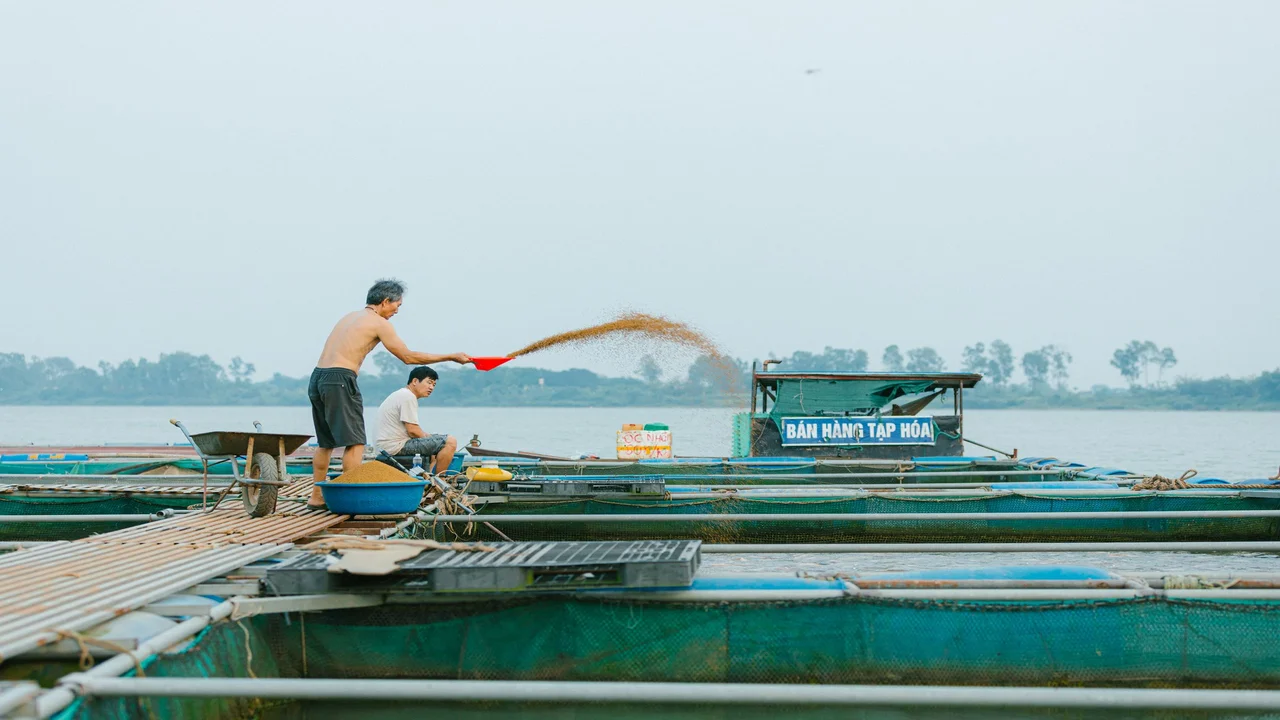
Commercial fish feeding operations utilizing high-efficiency extruded floating pellets in freshwater aquaculture.
The Extrusion Physics: Why Starch Cooking Drives Superior FCR
The core biological advantage of floating fish feed lies in the cooking extrusion process. Inside the extruder barrel, high mechanical shear, steam injection, and pressure (25 to 35 bar) heat the mash to 115°C–130°C:
- Gelatinization Over 90%: Fish possess shorter digestive tracts than terrestrial animals and lack the high amylase activity needed to digest raw plant starches. Extrusion breaks complex starch bonds into easily absorbable carbohydrates, boosting carbohydrate digestibility from 55% to over 85%.
- Expansion & Buoyancy Control: As the feed exits the extruder die plate into atmospheric pressure, instant moisture vaporization creates microscopic cellular air pockets. This lowers the pellet’s bulk density to 420–480 grams per liter, providing long-lasting buoyancy.
- Sterilization & Pathogen Elimination: High temperature and pressure neutralize heat-labile anti-nutritional factors (such as trypsin inhibitors and lectins) present in soybean meal and canola cake, while destroying water-borne bacteria.
Species-Specific Feeding Protocols in Bangladesh Aquaculture
Successful commercial farms do not follow a one-size-fits-all feeding regimen. Feed type and pellet caliber must match the anatomical feeding habits of each species:
- Commercial Monoculture (Pangas & GIFT Tilapia):
Feed 100% extruded floating feed. In early nursery phases (5–20g), feed 2.0 mm micro-pellets with 30–32% crude protein at 5% of body weight. In grower phases (100–500g), transition to 28% protein 4.0 mm floating pellets at 2.5% to 3.0% biomass daily. - Native High-Value Catfish (Pabda, Gulsha, Shing, Magur):
These species require high dietary protein (32% to 36%) with marine fish meal inclusion. Small floating pellets allow farmers to monitor feeding vigor in shallow nursery ponds without clouding the water. - Composite Carp Polyculture (Rui, Catla, Mrigal):
Adopt a dual feeding strategy. Catla and Rui readily adapt to surface floating feed in the morning. For bottom-dwelling Mrigal, deploy high-density sinking feed across fixed submerged feed trays 30 minutes after surface feeding.
Managing Water Chemistry & Winter Feeding Adjustments
Pond productivity is intimately tied to ambient water temperature in the northern river basins of Natore and Chalan Beel:
- Winter Dormancy Protocol (December to January): When water temperatures fall below 20°C, fish metabolic enzyme activity drops by up to 50%. Continuing normal feeding rates causes feed to accumulate at the bottom, creating a lethal toxic buildup in spring. Farmers should reduce daily feeding rations by 40% to 60%, offering feed only during peak afternoon sunlight (1:00 PM to 3:00 PM).
- Secchi Disc Monitoring: Maintain pond water transparency between 25 cm and 35 cm. If water transparency falls below 20 cm due to dense algal blooms, cease feeding for 24 hours and operate aerators to avoid night oxygen crashes.
Field Integration Across Natore Agro Projects
Our nutritional research is continuously validated across diverse regional aquatic facilities, including our demonstration units at Animated Fish and Poultry Farm and the commercial dighi complexes managed under the All Agricultural Project.
Raw ingredient quality is secured through SS Agro Trade Link, while specialized pond water bio-regulators and mineral supplements are coordinated with Oxford Agro Chemical Industries Ltd.
Farmer Diagnostic Guide: Testing Floating Feed Quality
Before investing in bulk feed consignments, commercial farmers should execute this 3-step field test:
- The 30-Minute Water Glass Test: Place 20 pellets in a clean glass of pond water. At least 18 pellets (90%) must remain floating after 30 minutes. Water should remain crystal clear without shedding oily residue or cloudy sediment.
- Pellet Uniformity & Dust Count: Inspect 50kg feed sacks. Fines and broken crumbles must not exceed 1% of the total sack weight. Excessive dust indicates improper extruder cutting or weak starch gelatinization.
- Aroma & Palatability: The pellets should possess a clean, oceanic fish meal aroma with zero burnt scorch marks.
Frequently Asked Questions (Aquaculture Feed Management)
Why is the FCR of floating fish feed superior to sinking feed?
Extruded floating feed achieves superior FCR (typically 1.20 vs 1.70) because starch is cooked at high temperature and pressure, doubling carbohydrate digestibility. Additionally, since the feed stays on the surface, farmers stop feeding as soon as fish are satiated, completely eliminating uneaten feed loss.
Can Indian Major Carps (Rui, Catla) consume floating feed?
Yes. Both Catla (surface feeder) and Rui (column feeder) quickly adapt to floating pellets within 3 to 5 days of training. Using floating feed for carps significantly speeds up harvesting weight and keeps pond water clean compared to traditional mash or mustard cake dough.
How does uneaten sinking feed cause fish mortality?
Uneaten sinking pellets accumulate in bottom mud and undergo anaerobic bacterial decomposition. This process strips dissolved oxygen from bottom water layers and generates toxic ammonia and hydrogen sulfide, triggering fish piping at the surface and mass mortality at dawn.
What is the recommended protein percentage for Pangas feed?
For commercial Pangas culture in Bangladesh, starter feed requires 28% to 30% crude protein, while grower and finisher stages thrive on 24% to 26% balanced crude protein with optimal essential amino acid ratios to prevent excessive abdominal fat deposition.
Maximize Commercial Pond Yield with SS Feed Industries Ltd
Engineered with advanced extrusion technology at our Natore plant, our floating and sinking feeds deliver high water stability, clean pond beds, and industry-leading FCR for fish farmers across Bangladesh.